











Dedicated servers represent a strong infrastructural pillar that provides a dedicated hosting solution for the online gaming experience.
Unlike other types that rely on peer-to-peer connections or player-hosted servers, dedicated servers are purpose-built, stand-alone machines designed to handle the intense processing and data transfer tasks required by modern multiplayer online games.

Dedicated servers represent a strong infrastructural pillar that provides a dedicated hosting solution for the online gaming experience.
Unlike other types that rely on peer-to-peer connections or player-hosted servers, dedicated servers are purpose-built, stand-alone machines designed to handle the intense processing and data transfer tasks required by modern multiplayer online games.


This paper takes an in-depth look at the fundamentals of game-specific servers, dissecting their role, advantages, and impact on the gaming landscape.
Not everyone wants to self-host; for high performance without the hassle of setup, check out these ready-to-use game servers that offerGame Server Activity。
pivot
- 专用服务器将其所有资源,包括 CPU、内存、存储空间和带宽,专门分配给单一游戏或游戏社区使用
- 玩家对专用服务器的设置拥有完全的管理权限
- 专用服务器通常提供充足的存储容量,以容纳大型游戏文件及未来的扩展内容
- 服务器提供商或游戏开发者持续监控专用服务器的性能,以识别并解决可能影响游戏体验的任何问题
- 全面的备份策略可根据游戏环境的具体需求和资源,结合不同的备份方法
What are the key features of a dedicated server?
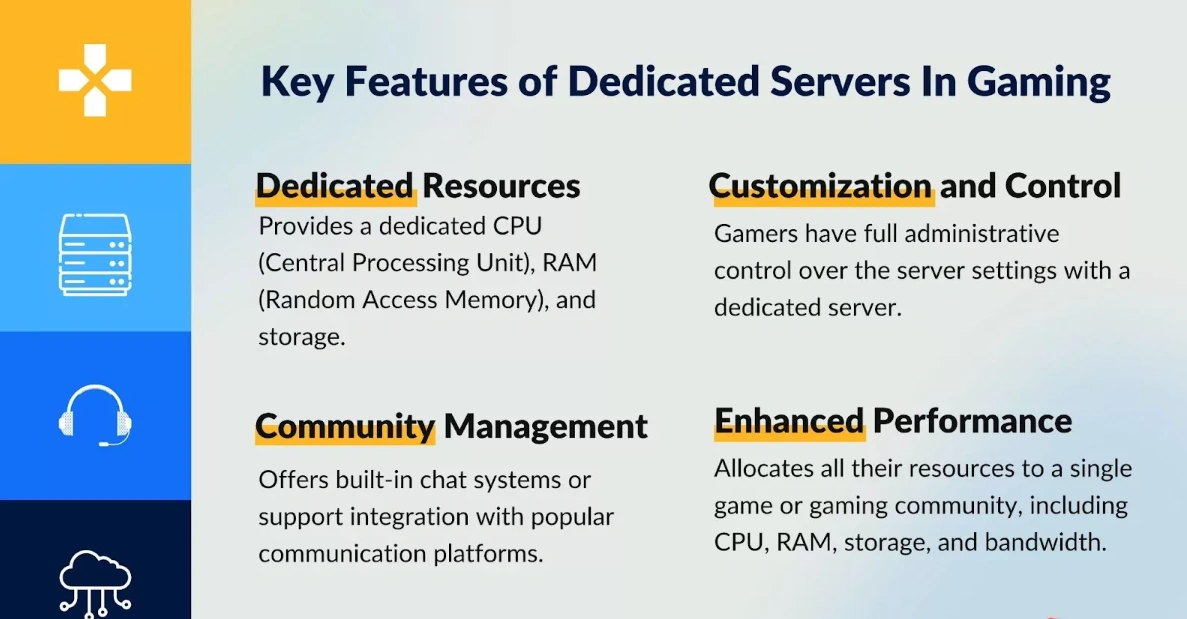
Dedicated Serveroffers a number of key features that set it apart from other hosting options and make it an integral part of the gaming industry. Here are some of the notable features that define dedicated servers:
Enhanced performance and stability
Dedicated servers dedicate all of their resources, including CPU, memory, storage, and bandwidth, to a single game or gaming community. This exclusivity ensures that the game has exclusive computing power and sufficient resources to cope with multi-player demands, complex calculations and data-intensive operations.
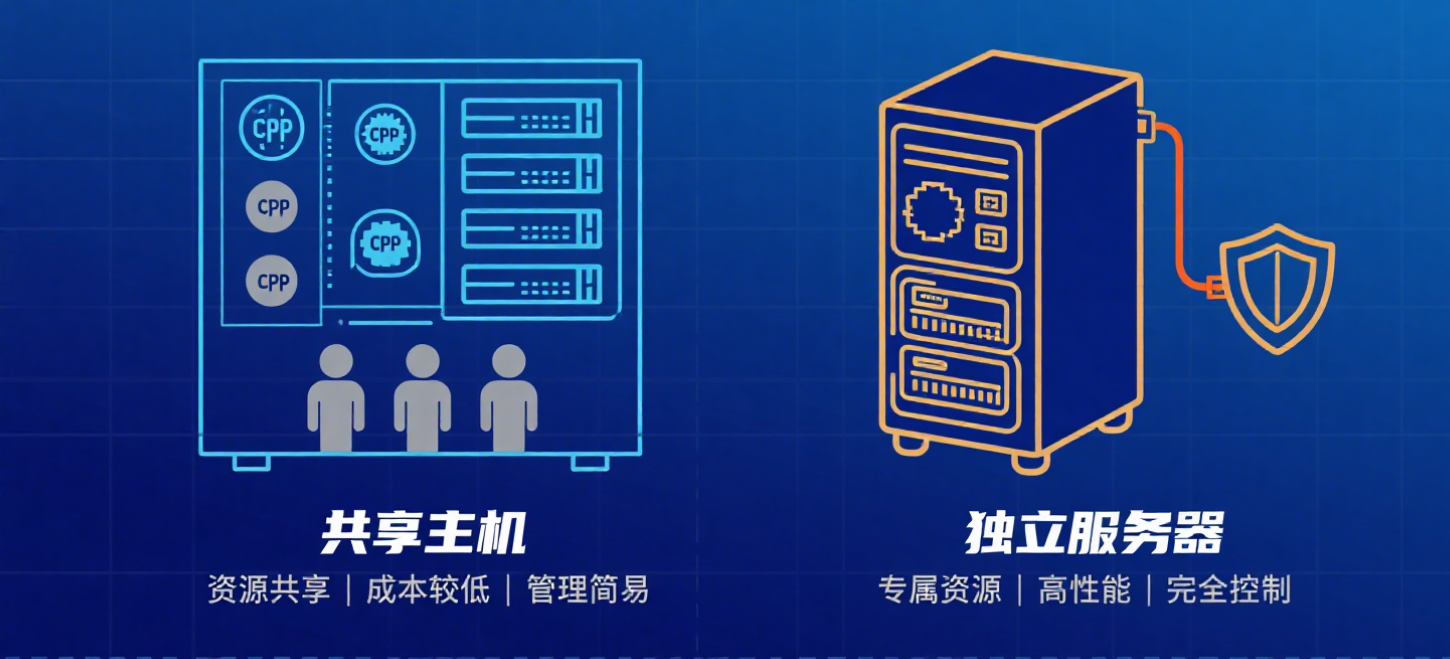
In comparison.Shared Hostingor point-to-point connections allocate resources among multiple users, which can lead to performance bottlenecks and degrade overall performance.
Dedicated resources and scalability
Dedicated servers provide dedicated CPUs (Central Processing Units), RAM (Random Access Memory) and storage space for gaming purposes. The server's CPU handles the complex computations, physics simulations, AI processing, and other CPU-intensive tasks required for multiplayer games.
At the same time, dedicated RAM ensures that the game has enough memory resources to handle simultaneous multi-player actions, interactions and data processing.
In addition.Data storage serversOften providing ample capacity to accommodate large game files and future expansions, making seamless updates and content additions possible without compromising performance.
Customization and Control
Players have full administrative access to the server settings through the dedicated server and can customize a variety of server parameters according to their personal preferences and gaming style.
For example, games like Phantom Beast Paru are extremely popular among players who want to host customized worlds with modules and plugins. If you want to try this out without an upfront fee, you can explore the offerings ofPhantom Palu Game Serverof service providers.
Players can also install modules and plugins of their choice on the server, opening up a wide range of possibilities for gameplay customization.
Modules can introduce new game mechanics, add content, improve picture quality, create new game modes, and utilize plug-ins to provide features such as anti-cheat measures, server management tools, and community plug-ins that enhance player interaction.
Multiplayer and community management
Dedicated servers often provide built-in chat systems or support integration with popular communications platforms. These chat systems support real-time communication, which facilitates coordination, strategy and social interaction.
Dedicated server chat systems typically offer features such as private messaging, group chat, and customizable chat channels to enable players to communicate effectively and build in-game communities. In addition, dedicated servers may support voice chat integration to enhance the multiplayer experience and enable seamless communication between players.
How dedicated servers work

Dedicated servers are powerful machines that are specialized for hosting specific applications or services, such as games. They operate in a client-server model, where the server is responsible for managing and providing resources to connected clients (which can be individual players or other servers). Administrators can applyData storage serversto improve server performance.
The following is a simplified description of how a game-specific server operates.
Server Hardware
Dedicated servers are equipped with high-performance processors such as Intel Xeon or AMD EPYC CPUs, ample memory capacity, and fast storage drives for data storage, usually solid-state drives (SSDs).
These high-performance hardware components enable dedicated servers to deliver a smooth, responsive and immersive gaming experience, ensuring that players can enjoy multiplayer games without performance bottlenecks or resource constraints.
For example, some gaming enthusiasts are committed to building the ARK Ultimate Mobile Server configuration, which combines top-of-the-line hardware with mobile access to manage their ARK world from anywhere.
Exclusive resource allocation
The exclusive resource allocation of dedicated servers ensures stable performance of hosted games. Since there is no resource sharing or contention, the game is able to reach its full potential without being affected by other processes or users on the server.
This consistency is critical to maintaining a smooth gaming experience, especially in demanding multiplayer scenarios involving many players and complex game mechanics.
Server Management
The server provider or game developer continuously monitors the performance of the dedicated server to identify and resolve any issues that may affect the gaming experience. This includes monitoring server resource usage, network connectivity, and server response times.
They can optimize server configurations by analyzing performance metrics, fine-tuning resource allocations, and implementing necessary adjustments to ensure optimal performance and responsiveness.
Example of a game
Dedicated servers can host multiple game instances, allowing players to connect and play simultaneously in a shared gaming environment. When a player initiates a multiplayer game session, the dedicated server creates a new game instance specifically for that session.
The server recognizes appropriate players, establishes a connection, and assigns them to the appropriate game instance so that they can participate in multiplayer matchmaking.
Server Management Tools
Dedicated server management tools often include remote management features that enable administrators to access and control servers from anywhere.
A user-friendly interface allows administrators to remotely perform tasks such as server configuration, software updates, and troubleshooting without physically touching the server.
Player Connection and Interaction
Network stability is critical in online games. A stable network connection ensures that packets are transmitted continuously without interruption or delay. An unstable or unreliable network connection can lead to packet loss, high latency (lag), and even disconnection, which can cause game stuttering, synchronization problems, and player frustration.
A stable network connection helps maintain the integrity of the game's real-time interactions, ensuring smooth gameplay and accurate presentation of events.
Choosing the right dedicated server provider
Selecting the rightDedicated server providersis a crucial decision that can significantly impact your gaming experience. Here are a few key factors to consider when choosing a dedicated server provider:
Server Performance and Specifications
When choosing a dedicated gaming server, it is important to prioritize the performance and specifications of the server hardware. This ensures that the server has the necessary resources to provide a smooth and lag-free gaming experience. factors such as CPU performance, memory capacity and storage type play a decisive role in the quality of the gaming experience.
Network infrastructure and latency
The network infrastructure is critical to providing players with a stable and low-latency connection. Real-time interaction is extremely critical in online gaming, so minimizing latency (i.e., the delay time between a player action and an in-game response) is especially important.
By investing in dedicated servers from these providers, players can have confidence in the stability and reliability of their internet connection, resulting in a more immersive, responsive and enjoyable gaming experience.
Scalability and Flexibility
Scalability refers to the ability of a server to adapt to the growing needs of the gaming community and effectively handle the increasing server load. The ability to upgrade server resources as needed ensures that the gaming experience remains smooth, responsive and latency-free.
By choosing a dedicated server provider that offers flexible solutions and scalable options, game developers and server administrators can effectively manage server growth, optimize costs, and deliver a gaming experience that scales with the needs of the gaming community.
DDoS protection
DDoS (Distributed Denial of Service) attacks are a serious threat to the stability and availability of dedicated servers in the gaming industry. These malicious attacks cause service disruptions by dumping massive amounts of traffic on servers, preventing them from responding to legitimate requests.
Server providers implement a range of measures, including traffic monitoring, filtering, mitigation techniques, global network infrastructure and redundant systems to effectively detect and mitigate DDoS attacks.
By taking proactive measures to defend against such attacks, server providers are able to maintain server availability, minimize outages, and safeguard the player's gaming experience.
Support and technical assistance
Responsive customer support and technical assistance from a professional server provider is essential to maintaining a seamless gaming experience. Knowledgeable staff, 24/7 support services, and a work order system allow players to resolve server-related issues quickly and efficiently.
The expertise of the technical support team, coupled with proactive monitoring and maintenance services, enhances the overall performance, security and reliability of the server. By choosing a dedicated server provider that emphasizes customer service, players can have peace of mind knowing that help is always available to ensure smooth and enjoyable gameplay.
Reputation and Evaluation
Gathering information about different service providers is crucial when choosing a dedicated server that suits your gaming needs. You can get the necessary information by conducting thorough research, reading reviews, and seeking recommendations.
This information will help you evaluate its reliability, customer support, performance, and whether it fully meets your gaming needs. Please take into account your specific needs, budget, and feedback from other gamers to make an informed decision that meets your gaming expectations.
Pricing and cost-effectiveness
Keep in mind that pricing models and cost-effectiveness can vary significantly between different dedicated server providers. Evaluate your budget, your server needs, and the level of service and performance you expect.
Compare multiple service providersThe company's pricing structure, promotions, bundles, and overall reputation allow it to make informed decisions that provide the best value for your gaming needs.
Advantages of dedicated servers in gaming
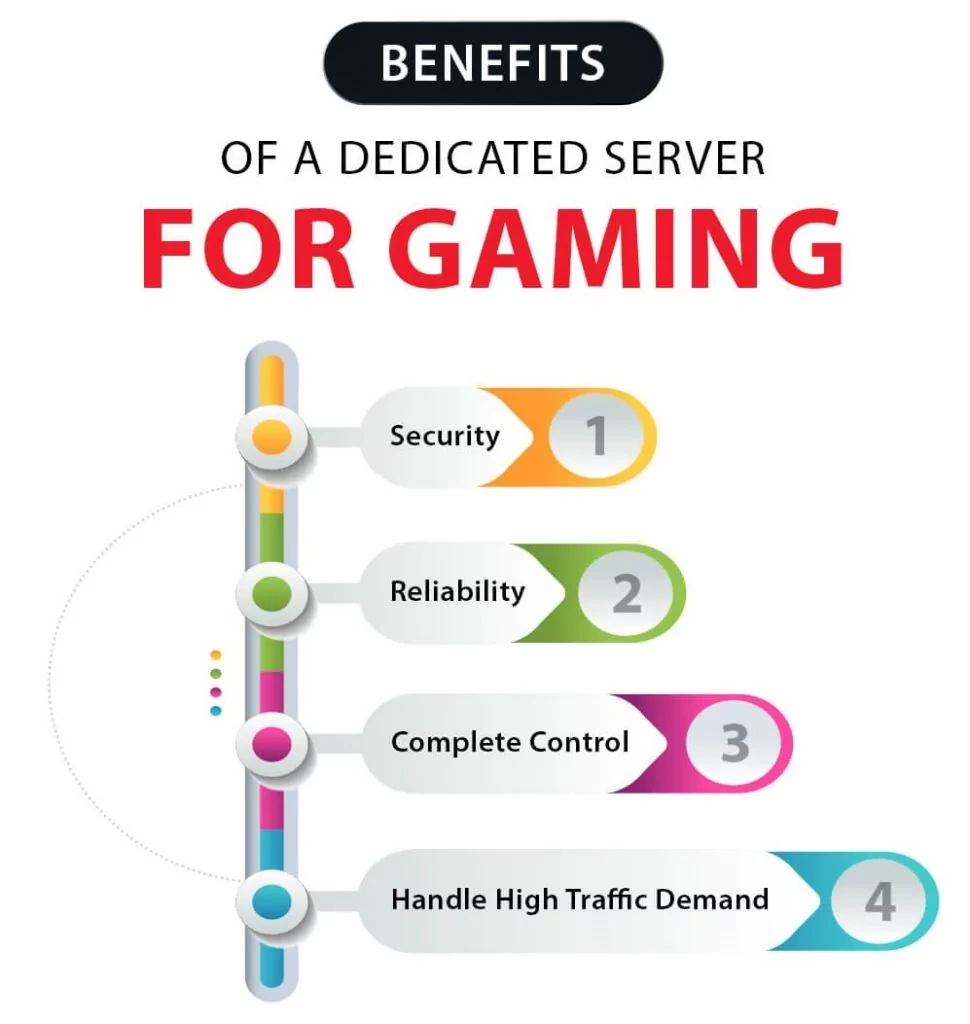
Dedicated servers offer numerous benefits in the gaming world, including a robust infrastructure that enhances the gaming experience for players and game developers. Here are some of the key benefits of dedicated servers in gaming:
Enhanced performance and stability
Dedicated servers offer better performance and stability than shared or peer-to-peer hosting. By providing dedicated resources, reducing latency and ensuring a stable hosting environment, dedicated servers can effectively reduce latency, improve responsiveness, and deliver a smoother gaming experience.
Game developers and gamers alike benefit from the optimized network infrastructure and scalability options offered by dedicated servers, which provide seamless connectivity for multiplayer gaming experiences and can accommodate growing gaming communities.
Improved multiplayer experience
Dedicated servers provide a smoother, more enjoyable multiplayer gaming experience by supporting a larger number of players, minimizing connectivity issues, ensuring a fair gaming experience, and promoting community interaction. With their dedicated resources and server management capabilities, dedicated servers create an environment where players can easily connect, compete and collaborate.
The ability to customize and modify the game on a dedicated server adds another layer of fun and personalization, making the multiplayer experience truly engaging and memorable.
Customizability and control
Full control over dedicated server settings and configurations allows players to customize game modes, rules, modules, and plug-ins according to their personal preferences. This customization not only empowers players to shape their own gaming experience, but also fosters innovation and experimentation on the part of game developers, creating a dynamic and engaging multiplayer environment.
The ability to customize and personalize games on dedicated servers enhances player satisfaction, promotes community interaction, and adds depth and longevity to the gaming experience.
Scalability and Flexibility
One of the significant advantages of gaming dedicated servers is their scalability, which allows them to effectively adapt to the growing community of players. They offer the flexibility to upgrade server resources, add more game servers, and expand gaming zones on demand.
Dedicated servers can respond to growing player demand by upgrading server resources, adding more game servers, expanding game zones, and implementing load balancing while maintaining performance and stability. This scalability enables game developers to support a larger player base, foster community development, and build sustainable gaming ecosystems.
Community building and management
Dedicated servers provide features and functionality that promote community interaction and participation.Team support, in-game chat system, community forums, events, and module functionalityAll contribute to the development of a strong gaming community.
Dedicated servers serve as hubs for player connectivity, communication, competition, and collaboration, enhancing the sense of belonging and camaraderie among community members. Through these features, the social bonds of the gaming community are strengthened, creating an environment where players can build lasting relationships, share experiences, and work together to drive the growth and development of the gaming ecosystem.
Precautions and Safety Considerations
While dedicated servers bring many benefits to gaming, it's crucial to recognize the potential risks and vulnerabilities they can present.
Below are key considerations regarding the security of dedicated game servers and some basic steps that server providers and game developers should take to protect dedicated servers:
Server Hardening and Configuration
Server Hardening and Configuration is the process of implementing security measures and optimizing server settings to enhance server security posture. It involves the application of various best practices, configurations, and security controls designed to reduce vulnerabilities and protect servers from unauthorized access, data leakage, and other security threats. Below is a description of the various steps and practices involved in server hardening and configuration:
- Firewall Setup and Configuration
Firewall protection and strong access control measures are important components of network security. Strong access control measures, such as secure authentication mechanisms, help to ensure that only authorized individuals have access to servers.
This includes enforcing strong password policies, implementing two-factor authentication (2FA), and limiting administrative privileges to trusted personnel. By taking these steps, organizations can significantly improve the security posture of their servers and effectively reduce the risk posed by unauthorized access and cyber threats.
- Regular software updates and patches
Regular updates and patches are essential to address security vulnerabilities, fix software issues, improve performance and maintain compatibility. It is important to note that updates and patches should be applied after adequate testing and in a controlled environment to avoid any unintended consequences or disruptions.
Regular monitoring of software vendors' release notes and security bulletins helps them keep up to date with update and patch information related to server operating systems, applications, and components.
Data Backup and Disaster Recovery
Data backup and disaster recovery plans are critical for gaming dedicated servers to prevent data loss, reduce downtime, maintain business continuity, comply with regulatory requirements, build player trust, and enable faster recovery.
Game developers and service providers are able to ensure the security, integrity and availability of game data, ultimately enhancing the gaming experience for players.
- Data Backup Strategy
Regular testing of backup and recovery processes is critical to ensure data integrity and the ability to recover successfully if needed. A comprehensive backup strategy can incorporate different backup methods depending on the specific needs and resources of your gaming environment.
This may include regular full backups for full system recovery, followed by incremental backups of frequently changing data, and implementation of off-site backups to protect against catastrophic events.
- Disaster recovery planning
A comprehensive recovery plan helps minimize downtime, protect data and assets, ensure business continuity, mitigate financial losses, and meet regulatory requirements. It enables organizations to respond effectively to unexpected events, recover quickly, and maintain the stability and availability of gaming dedicated servers.
- Testing and validation
It is critical to test and validate backup and disaster recovery processes on a regular basis in order to identify potential problems, confirm data integrity, validate recovery objectives, familiarize personnel with recovery procedures, evaluate and improve plans, and meet compliance requirements.
Through regular testing, organizations are able to ensure the reliability and effectiveness of their backup and recovery strategy, ultimately enhancing the ability to recover from a disaster and protect their gaming dedicated server infrastructure.
Protection against DDoS attacks
Distributed Denial of Service (DDoS) attacks are malicious behaviors designed to disrupt the normal operation of a network, system, or service by sending massive amounts of traffic to it. These types of attacks usually involve multiple parties acting in concert to pound the target with traffic from multiple sources, making it difficult to distinguish between normal and malicious traffic.
Here are some of the challenges and countermeasures for protecting dedicated servers from DDoS attacks:
- DDoS Detection and Protection
Detecting and preventing DDoS attacks requires a combination of techniques and tools to effectively mitigate their impact. The following are some of the methods used to detect and prevent DDoS attacks:
- Traffic Monitoring and Analysis
- Intrusion Detection and Prevention System (IDPS)
- Rate limiting and traffic shaping
- Cloud-based DDoS Protection Services
- Network and server hardening
It is important to note that no single technology or tool can provide complete protection against DDoS attacks. Implementing a multi-layered defense strategy that combines multiple technologies and tools can significantly increase the ability to detect and prevent DDoS attacks.
- Content Delivery Network (CDN)
Content Delivery Networks (CDNs) play a key role in spreading server load and mitigating the effects of DDoS attacks by caching and serving content from distributed servers.
CDNs help spread server loads, protect against DDoS attacks, increase content delivery speeds, and provide scalability, ultimately delivering a smooth and reliable gaming experience for players. Game developers and community managers need to understand CDNs.
- Traffic Filtering and Rate Limiting
By implementing traffic filtering mechanisms and rate limiting policies, server administrators can effectively manage inbound traffic, mitigate the effects of DDoS attacks, prioritize gaming traffic, and optimize server performance. These measures help ensure a stable and reliable gaming experience for players while protecting the dedicated server infrastructure from malicious or excessive network traffic.
reach a verdict
Overall, gaming dedicated servers significantly improve gaming performance and play experience by providing high-performance hardware, stable network connectivity, reduced latency, enhanced stability, scalability options, and customization flexibility. Together, these features create a smoother, more responsive and fun multiplayer gaming experience, making dedicated servers the preferred solution for hosting gaming instances.
Next steps: what to do now?
Extended Reading - Useful Resources
Frequently Asked Questions
Why are dedicated servers vital in the game?
Dedicated servers are crucial in gaming as they ensure a stable and optimized gaming experience by providing dedicated resources, low-latency connections, and better control over game settings.
How are dedicated servers different from other hosting options?
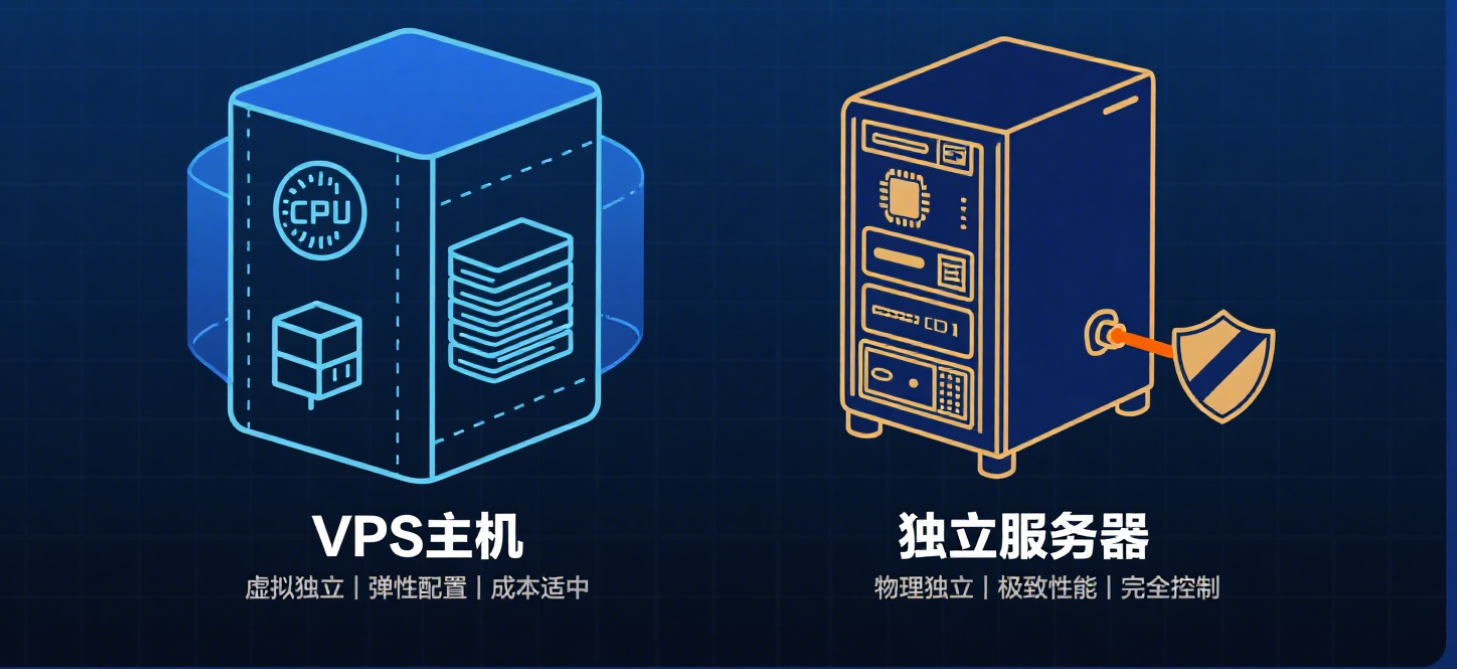
Dedicated servers differ from other hosting options in terms of performance, security and scalability. They offer the best performance and control, but are also the most expensive option.
Can I host my own game dedicated server?
Yes. You can host a dedicated server on your own if you are technically equipped to do so. You can also hire an expert to set up and manage the server.
Do I need a dedicated server for each game?
No, not all games require dedicated servers. However, most popular multiplayer games usually offer dedicated server options for those who want to reduce latency, improve game stability, get customization options, enhance security, and accommodate a larger number of players.


 English