


















INTRODUCTION: Why do you need a professional protection program?
In the digital age, cyber attacks have become a constant threat to business operations.
The total number of global DDoS attacks in the second half of 2024 spiked by 56% year-over-year, according to the DDoS Radar Report Q3-Q4 2024, published by Gcore, and disclosed by network service provider Cloudflare.
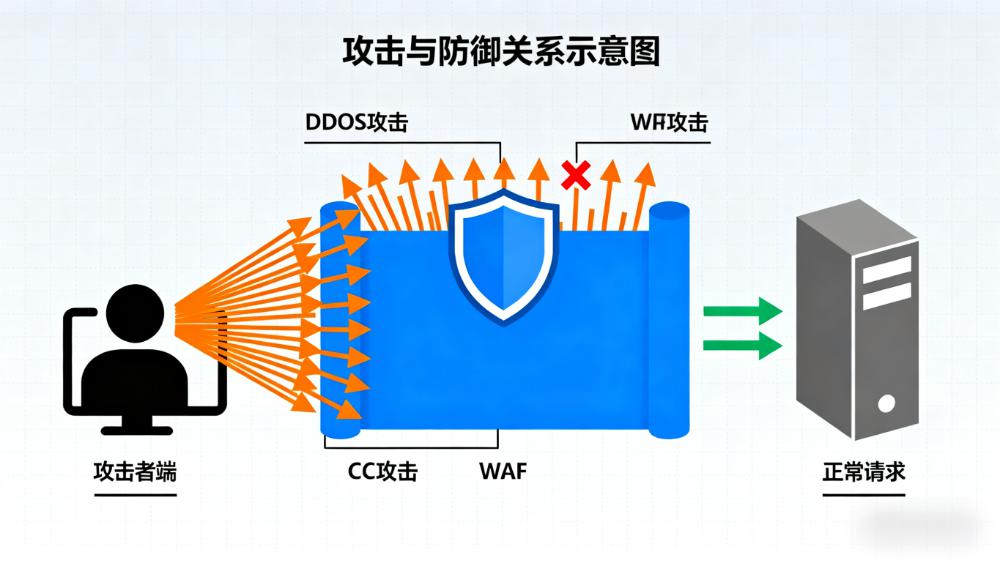
A DDoS attack occurred on October 29, 2024, and the peak of attack traffic reached 5.6Tbps, which set a new world record. At the same time, the application layer attacks have become more complex and hidden, and traditional security measures are often difficult to deal with. High-defense CDN and cloud WAF, as the core defense line of modern network security, have become the necessary protection means for all kinds of websites.
In this article, we will systematically analyze the technical principles, applicable scenarios and selection strategies of high-defense CDN and cloud WAF to help you build a comprehensive and cost-effective protection system.
First, high defense CDN: not just acceleration, but also a security barrier
1. The core value of a high-defense CDN
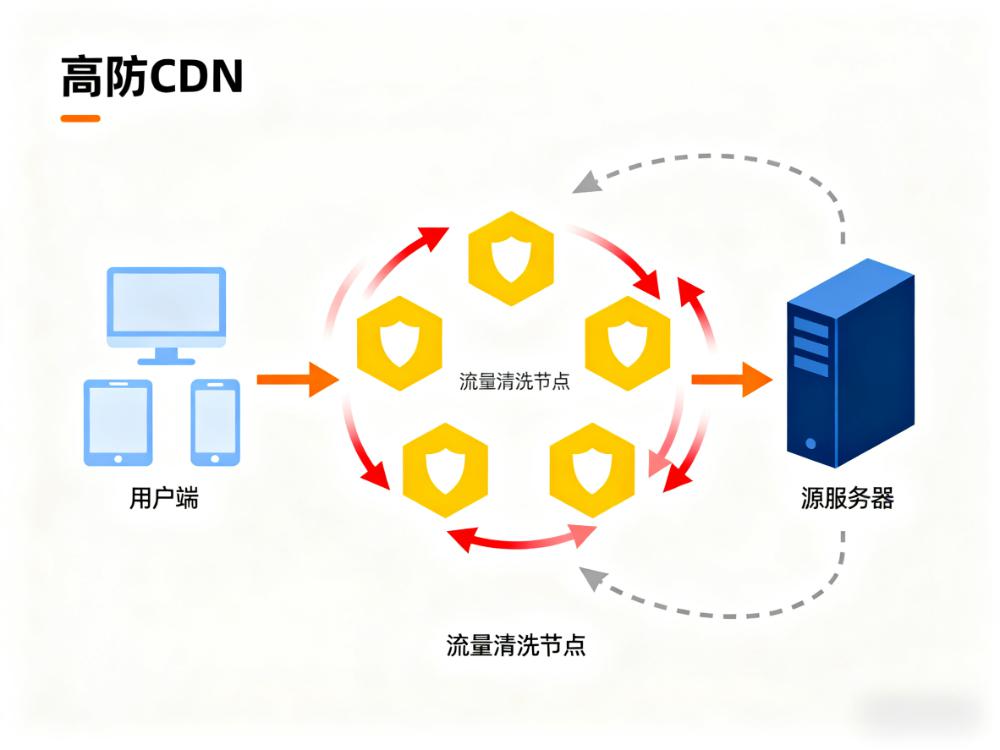
basic concept
High Defense CDN (Content Delivery Network and DDoS Protection Integrated Service) integrates professional-grade security protection capabilities on top of traditional CDN acceleration. It simultaneously realizes content acceleration and attack mitigation through globally distributed edge nodes.
Key differences from regular CDNs
| characterization | Ordinary CDN | High Defense CDN |
|---|---|---|
| Key Features | Content acceleration and distribution | Acceleration + Security Integration |
| protection capability | Basic protection, limited DDoS mitigation | Professional T-level DDoS protection |
| cost structure | Per-traffic/request billing | Usually includes a security service package |
| Applicable Scenarios | Low-risk content distribution | Business-critical applications |
2. The working principle of high defense CDN
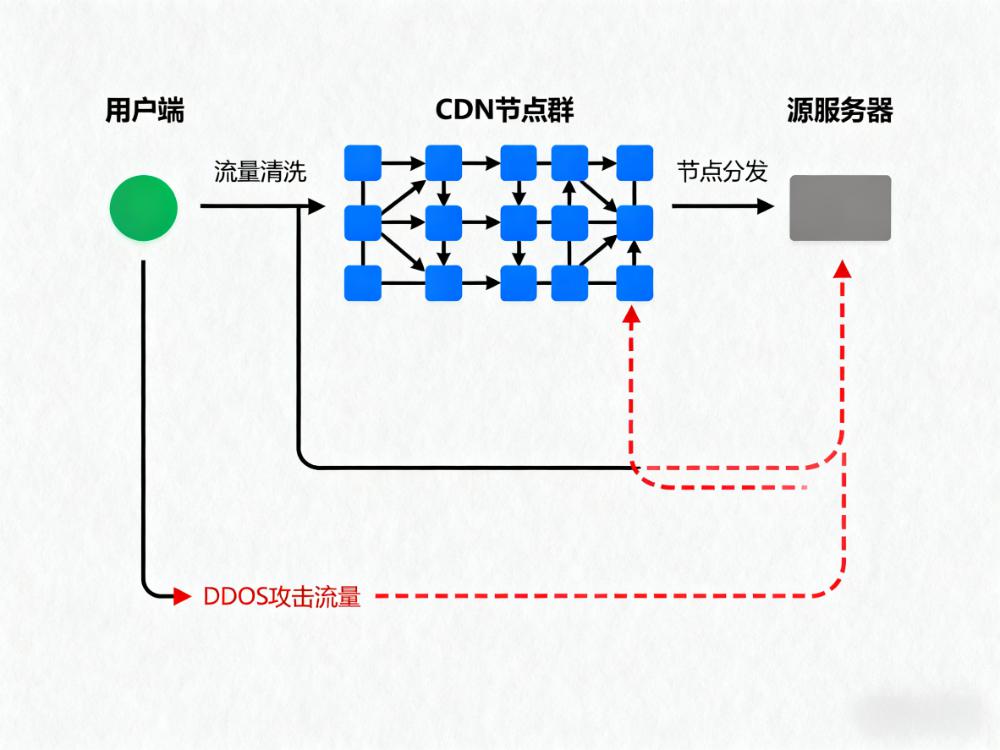
Protection Mechanisms Explained
- 1.Flow Cleaning Center: Dedicated cleansing facilities deployed in multiple locations around the globe to absorb and filter malicious traffic
- 2.Intelligent Dispatch System: Real-time analysis of traffic characteristics to direct malicious requests to the cleansing center
- 3.Edge Node Protection: Every CDN node has a basic protection capability for layer 1 filtering.
- 4.source-hiding technology: Real server IPs are completely hidden and the attack surface is dramatically reduced.
Performance Impact Analysis
- acceleration effect: Quality high defense CDNs usually provide both acceleration and security without slowing down access speeds
- Delayed impact: Intelligent routing technology ensures that legitimate traffic travels in the optimal route
- Functional compatibility: Modern High Defense CDN fully supports advanced features such as dynamic content, API interfaces and WebSocket.
3. When do I need a high-defense CDN?
Recommended Scenarios
- Websites that are frequently subject to traffic-based DDoS attacks
- E-commerce and financial platforms with requirements for access speed and security
- International business requires global acceleration and protection
- Suddenly high traffic event-type websites (e.g., promotions, ticketing systems)
Cost-effective considerations
High-defense CDNs are suitable for most small and medium-sized businesses, especially those such asAliyun ESA、Tencent Cloud EdgeOne、Faster High Defense CDNThese services offer flexible billing options and affordable introductory pricing.
Cloud WAF: Intelligent Application Layer Protection Experts
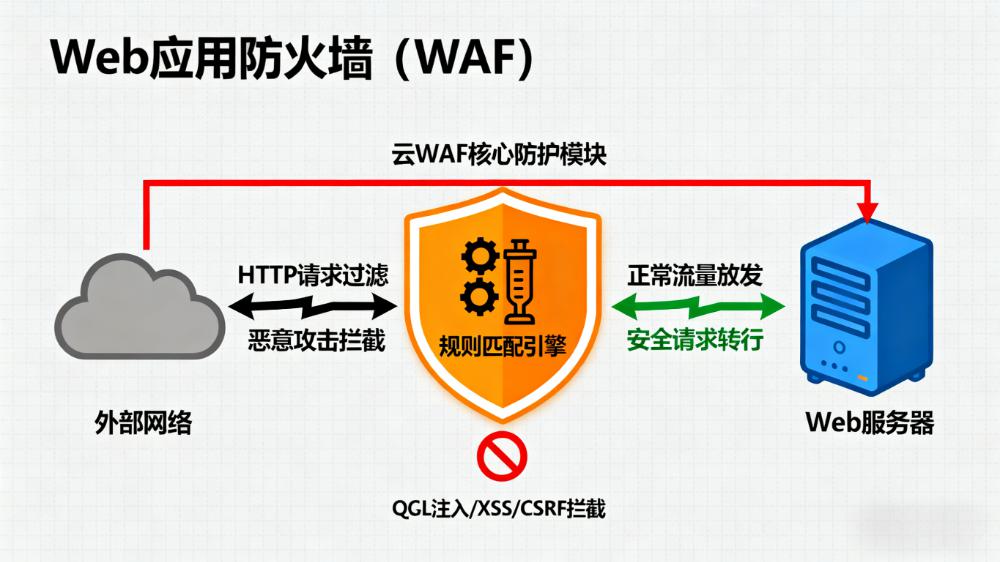
1. Core benefits of cloud WAF
basic definition
Cloud WAF (Web Application Firewall) is provided as a service without the need to deploy hardware devices and protects web applications through DNS resolution or traffic proxy.
Differences with traditional WAF
- Deployment method: Cloud services vs. hardware equipment/software installation
- maintenance cost: Automatic rule updates vs. manual maintenance
- scalability: Elastic Scaling vs. Fixed Capacity
- initial investment: Low start-up costs vs. high hardware investment
2. Cloud WAF protection capabilities
Comprehensive protection range
- OWASP Top 10 Vulnerabilities: SQL injection, XSS, CSRF and other common web vulnerabilities
- CC Attack Protection: Intelligent Human Recognition and Frequency Control
- API Security: API abuse protection and sensitive data leakage prevention
- zero-day exploit: Virtual Patch Technology Provides Protection Pending Official Fixes
Intelligent protection features
- machine learning engine: Identify new types of attacks based on behavioral analysis
- Reputation Repository Integration: Global threat intelligence sharing
- Customized rules: Customize protection strategies for specific business needs
- Detailed log: Provide complete attack logs and analysis reports
3. Cloud WAF application scenarios
Highly recommended
- Web applications that include user interaction and data processing
- Dynamic websites with login, search, form submission and more
- Need to meet compliance requirements such as PCI DSS, class protection, etc.
- Limited technical resources but need for specialized security
Typical User Cases
- E-commerce platforms: protection against commodity grabbing, API abuse
- Financial services: preventing transaction fraud, data breaches
- SaaS applications: secure isolation in multi-tenant environments
- Government websites: meeting compliance and continuity requirements
High Defense CDN vs Cloud WAF: How to Choose and Match
1. Functional contrasts and complementarities
| Protective Dimension | High Defense CDN Advantage | Cloud WAF Advantage |
|---|---|---|
| Network Layer DDoS | ⭐⭐⭐⭐⭐ (T-class protection) | ⭐⭐ (limited protection) |
| Application layer DDoS/CC | ⭐⭐⭐⭐ (basic protection) | ⭐⭐⭐⭐⭐ (Smart Protection) |
| Web Vulnerability Protection | ⭐⭐⭐ (limited rules) | ⭐⭐⭐⭐⭐ (full coverage) |
| Acceleration Performance | ⭐⭐⭐⭐⭐ (global acceleration) | ⭐⭐ (May cause increased latency) |
| API protection | ⭐⭐⭐⭐ (basic protection) | ⭐⭐⭐⭐⭐ (fine control) |
2. Combined deployment strategy
Option 1: Basic protection (suitable for small websites)
- High-defense CDN: Provides basic acceleration and security protection
- Cost: as low as a few hundred dollars per month
- Recommended:AliCloud ESA Basic、Tencent Cloud EdgeOne Basic Edition、CoolShield SCDN
Option 2: Standard protection (suitable for SMEs)
- High Defense CDN + Cloud WAF Basic Edition
- Cost: several thousand dollars per month level
- Recommended:Tencent Cloud EdgeOne+Tencent Cloud WAF Firewall
Option 3: Enterprise-level protection (suitable for business-critical)
- High Defense CDN Enterprise Edition + Cloud WAF Enterprise Edition + Security Monitoring Services
- Cost: customized to the size of the business
- Recommended:Tencent Cloud Equal Protection Compliance Security Solution
3. Implementation considerations
Technical compatibility
- SSL certificate management: support a variety of certificate deployment methods
- API interface compatibility: ensure proper functioning of business interfaces
- Customized domain name: support CNAME and NS mode access
- Caching policy: customizable caching rules to meet business needs
Performance Impact Assessment
- Latency testing: testing access latency in different geographic locations
- Failover: Understanding Service Provider SLAs and Failover Mechanisms
- Scalability: automatic scalability in case of bursty traffic
Managing complexity
- Control panels: interface friendliness and functional integrity
- Reporting capabilities: security event and traffic analysis reports
- Alarm mechanism: real-time alarms and notification methods
IV. Comprehensive Answers to Frequently Asked Questions
About High Defense CDN
"Does a high defense CDN affect website speed?"
Premium high security CDNs do not slow down access speeds, but instead accelerate and optimize routing through global nodes, often improving the access experience. Millisecond latency may only be introduced when performing complex attack detection.
"Does a small website need a high defense CDN?"
Depending on business importance. Even small websites can be attacked, modern high defense CDN services offer a variety of packages to choose from, small websites can choose the entry level package or check out ourRecommended Free CDN。
"How are high defense CDNs billed?"
Usually a combination billing model is adopted: basic subscription fee + excess traffic fee + security service fee. It is recommended to choose the appropriate billing method according to the business characteristics.
About Cloud WAF
"Can Cloud WAF Protect Against All Attacks?"
There is no 100% security, but modern cloud WAFs protect against most known and unknown threats. The key is proper configuration and regular rule updates.
"Does it require specialized skills to use?"
Mainstream cloud WAFs offer wizard-based configuration with basic features out of the box. Advanced features may require security expertise, but service providers often offer technical support.
"How do I check the effectiveness of the protection?"
Cloud WAF provides detailed security reports and real-time monitoring, allowing you to clearly see the type, number and source distribution of blocked attacks.
Synthesis of selection issues
"Should I go with a high defense CDN or a cloud WAF first?"
It is recommended that the choice be based on the primary threat:
- First encounter traffic-type DDoS: Priority high defense CDN
- Web Application Attacks First: Prioritizing Cloud WAFs
- Best practice is to use a combination of both
"What's the difference between domestic and foreign service providers?"
- Domestic service providers: good localization support, in line with domestic regulations, suitable for websites whose main users are in China
- International service providers: rich global nodes, advanced technology, suitable for international business
"Is the cost of protection high?"
There are already a variety of cost-effective solutions for safety and security:
- Startups: choose from free or basic packages (e.g.EdgeOne Basic Editionorfree version)
- Small and medium-sized enterprises: specialized packages costing several hundred to several thousand dollars per month
- Large enterprises: customized enterprise solutions
V. Implementation guide: five steps to selecting the best option
Step 1: Risk assessment
- Analyze business value and potential threats
- Determine acceptable downtime and data risk
- Assessing compliance requirements
Step 2: Needs analysis
- Traffic size and pattern analysis
- Security Event History Record Review
- Technical environment and integration requirements
Step 3: Program Selection
- Short-term trial of multiple service providers
- Compare performance, features and costs
- Refer to third-party reviews and user ratings
Step 4: Deployment testing
- Phased deployment, testing before full commissioning
- Perform penetration and stress tests
- Validate failover and emergency response processes
Step 5: Optimization Iteration
- Periodic review of security policies and rules
- Adaptation of protection programs to operational changes
- Maintain technical communication with service providers
Conclusion: Building a Continuously Evolving Security System
Choosing a high-defense CDN and cloud WAF is not a one-time decision, but a process that requires continuous optimization. As business develops and technology evolves, so do security requirements.
Key recommendations::
- Start with basic protection and gradually enhance security capabilities
- Choose a scalable solution that supports business growth
- Conduct regular safety assessments and adjust the plan accordingly.
- Establish a layered defense system by combining multiple protection layers
take note of
There is no absolute security in the modern network environment, but there is relative reliability. By correctly selecting and configuring a high-defense CDN and cloud WAF solution, you can effectively defend yourself against most network threats and provide a solid guarantee for the stable operation of your business.


 English