











Opening: why are these concepts so important?
In the Internet world, cybersecurity is no longer a topic exclusive to large enterprises. With the acceleration of digital transformation, both individual webmasters, small and medium-sized enterprises (SMEs) and large platforms are facing unprecedented cyber threats. Among them, DDoS attacks and CC attacks have become the most common forms of attacks due to their destructive power and low implementation threshold. And WAF (Web Application Firewall) is the core defense against these attacks.
This article will systematically parse these concepts in the most common language to help you build a complete cognitive system from scratch. Whether you are a technical novice or an experienced practitioner, you will get valuable information from it.
I. In-depth analysis: the nature of DDoS attacks and CC attacks
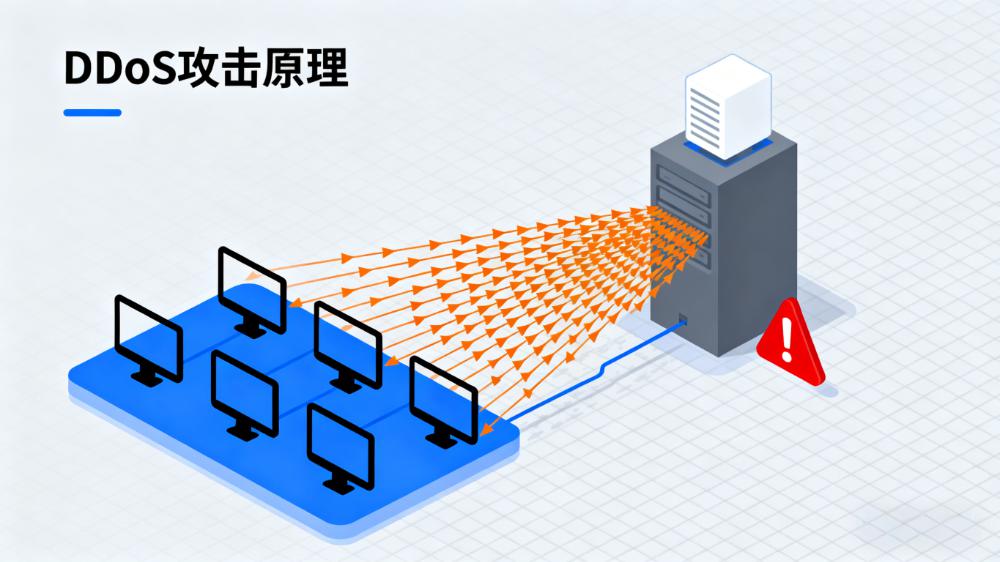
1. DDoS attacks: "traffic paralysis" in the cyber world"
Core concepts
DDoS (Distributed Denial of Service Attack) is a process of controlling a large number of infected devices (commonly known as "botnets") to send massive requests to a target server, exhausting its network bandwidth or system resources and rendering it inaccessible to normal users.
Attack Principles in Detail
- Source of the attack: Attackers typically infect tens of thousands or even millions of devices, including servers, PCs, IoT devices (cameras, routers, etc.) with malware
- Type of attack: These controlled devices send simultaneous requests to the target, creating a "flood of traffic"."
- attack target: Primarily for network bandwidth and underlying connectivity resources
real-world analogy
Imagine this: one day suddenly tens of thousands of people are hired to flood into a supermarket at the same time, and instead of shopping they just block the aisles, making it impossible for customers who really want to shop to get in. This is the basic principle of a DDoS attack.
Attack Symptom Recognition
- Extremely slow or completely inaccessible website
- Unusual surge in server network interface traffic
- Sharp loads on network devices (routers, switches)
- Normal users receive "Connection timed out" or "Service unavailable" errors
2. CC attacks: a precise war of resource depletion
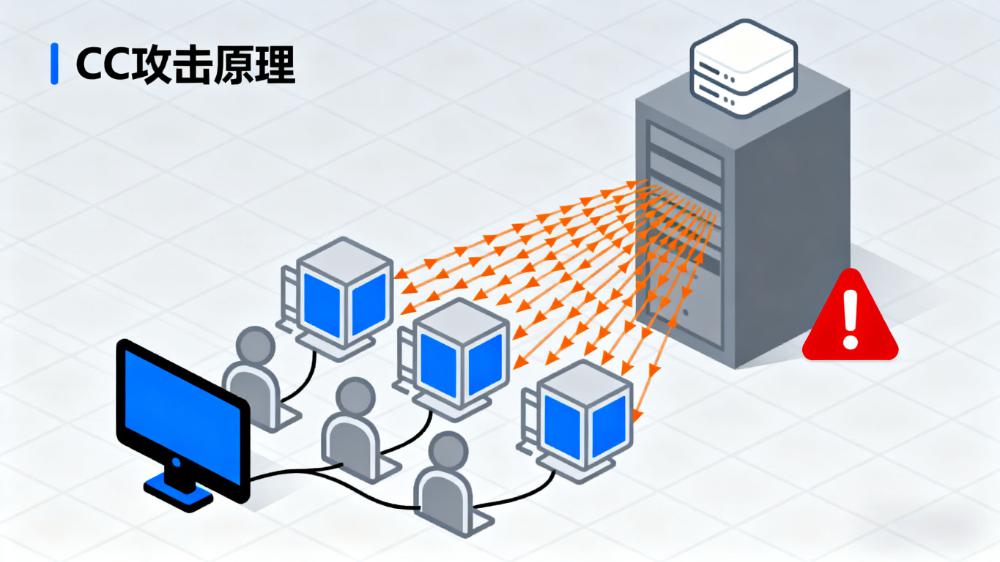
Core concepts
CC (Challenge Collapsar) attack is a special form of DDoS that focuses on application layer attacks. It simulates normal user behavior and launches a large number of requests for dynamic pages of a website, specifically consuming the server's CPU, memory and database resources.
Attack Principles in Detail
- Attack Characteristics: Not as bandwidth intensive as DDoS, but more "precise and vicious"."
- attack target: Usually choose search functions, data query pages, login interfaces, and other pages that require a lot of computing resources
- covert: Difficult for traditional firewalls to recognize because it mimics normal user behavior
real-world analogy
It's like hiring a large number of "pretend shoppers" who constantly ask for complex product information and check inventory details, leaving sales clerks overwhelmed and unable to serve real customers.
Attack Symptom Recognition
- Website access is extremely slow, but network traffic may not be abnormal
- Unusually high server CPU utilization (close to 100%)
- Dramatic increase in database load
- Specific functions (e.g. search, login) are not available at all
3. Key differences between DDoS and CC
| Feature Comparison | DDoS attack | CC attack |
|---|---|---|
| attack level | Network layer/transport layer (L3-L4) | Application layer (L7) |
| primary objective | exhaust network bandwidth | Consumption of server resources |
| Flow Characteristics | Large and apparently unusual flows | Traffic may be low but requests are frequent |
| recognition difficulty | Relatively easy to spot | Difficult to distinguish from normal traffic |
| Defense focus | Flow Cleaning and Filtration | Behavioral analysis and frequency control |
WAF: Your Exclusive Bodyguard for Web Applications
1. What is WAF? How does it work?
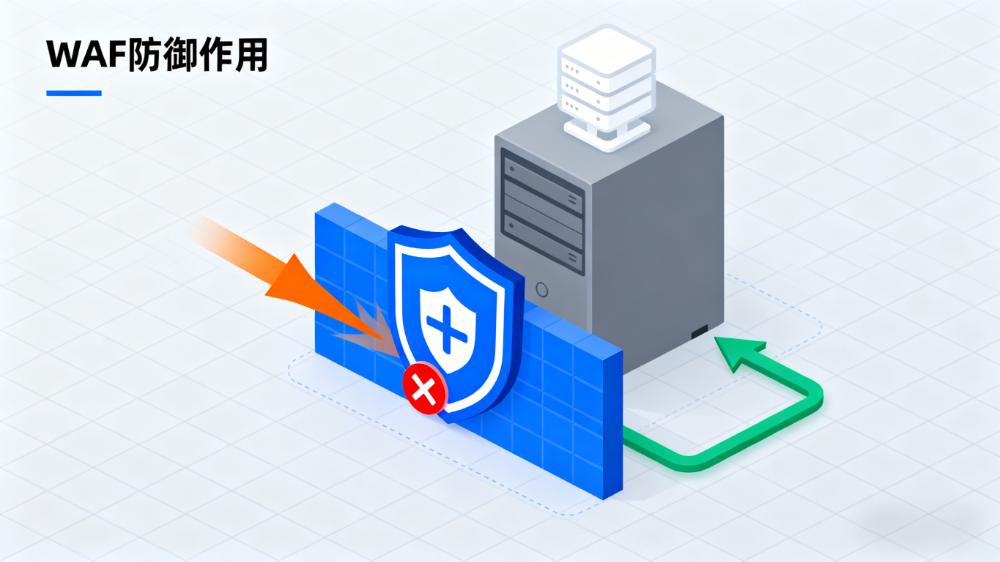
basic definition
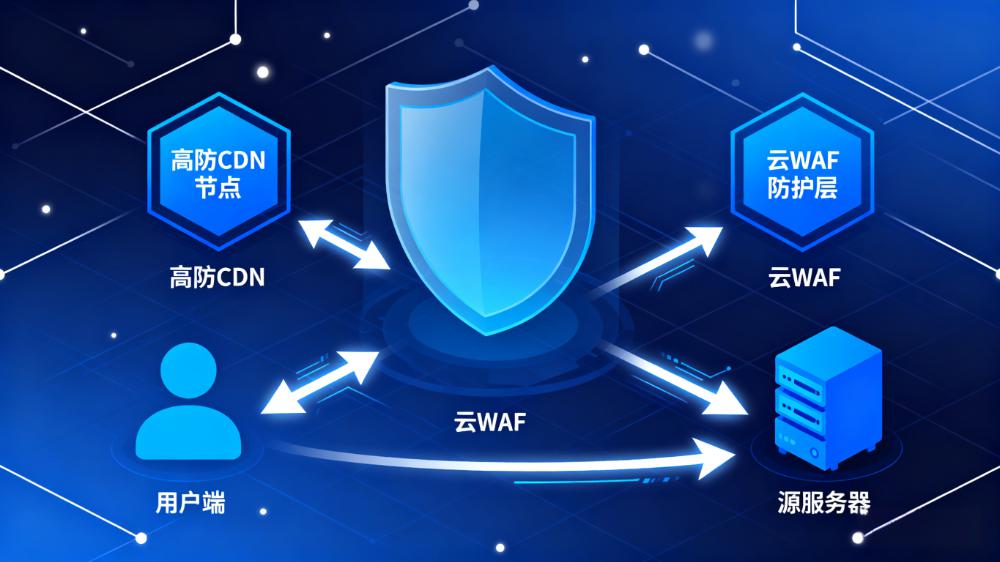
WAF (Web Application Firewall) is a security solution specifically designed to protect web applications. It sits between the web client and server and monitors, filters and blocks malicious requests in HTTP/HTTPS traffic.
Working Principle
- 1.Traffic Analysis: Check all requests coming into the web application
- 2.rule matching: Recognize malicious patterns based on security rule sets
- 3.Decision implementation: Allow legitimate requests to pass and block or challenge suspicious requests
- 4.Logging: Record all activities for analysis and audit
Key Features
- Preventing SQL Injection Attacks
- Blocking Cross-Site Scripting (XSS) Attacks
- Mitigation of DDoS and CC attacks
- Protecting Against Zero-Day Exploits
- Provide detailed access logs and analysis
2. How does WAF defend against DDoS and CC attacks?
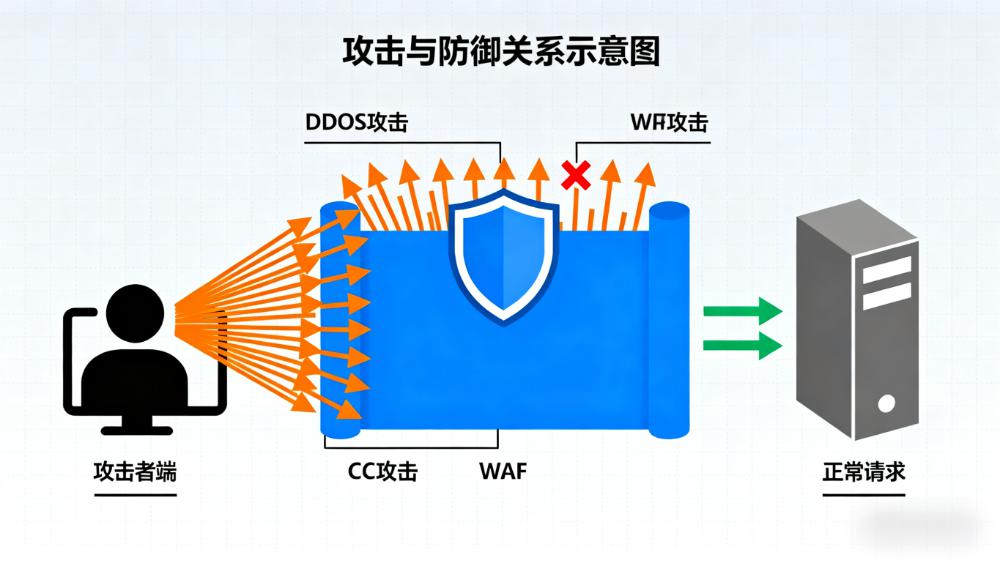
Countering DDoS Attacks
- speed limit: Setting the upper limit of request frequency per IP address
- IP Reputation Library: Automatically block known malicious IP addresses
- traffic shaping: Smoothly handles bursts of traffic and prevents system overloading
- Challenge mechanisms: Implementing CAPTCHA challenges for suspicious traffic
Countering CC Attacks
- behavioral analysis: Identify unusual user behavior patterns
- Resource protection: Special protection for high-consumption pages (search, login, etc.)
- session tracking: Monitor user session frequency and patterns
- Intelligent Learning: Using Machine Learning to Distinguish Between Normal and Malicious Traffic
3. How WAF is deployed
Cloud WAF Service
- No hardware installation required, enabled by DNS resolution or traffic forwarding
- Automatically update rules without manual maintenance
- Flexible scaling, pay-as-you-go
Local WAF devices
- Physical devices are deployed at the network boundary
- Provides lower latency protection
- Ideal for organizations with strict data compliance requirements
Software WAF
- Installed as a software module on a server, e.g. Pagoda WAF
- Lower cost for organizations with strong technical teams
III. Practical guide: how to select and implement a protection program
1. Assess your security needs
Key considerations
- Business size and criticality: small blogs and e-commerce platforms have different needs
- Technical capabilities: availability of specialized security teams
- Budget constraints: from free programs to enterprise solutions
- Compliance requirements: whether they need to meet specific industry standards
2. Layered defense strategy
Best practice recommendations
- 1.Infrastructure Protection: Choose a cloud service provider or IDC with DDoS protection capabilities
- 2.application layer defense (ALD): Deploying a WAF Solution to Protect Web Applications
- 3.monitoring and early warning: Installation of real-time monitoring and alarm systems
- 4.emergency response: Develop an emergency response process in the event of an attack
3. Cost-benefit analysis
Small websites/personal projects
- Choice of free or low-cost cloud WAF services
- Tencent cloudEdgeOne Free EditionProvides basic DDoS and CC protection
- Multiple Cloud Service Providers Offer Entry-Level WAF Services
small or medium size enterprise (SME)
- Professional Cloud WAF service is recommended
- Consider multiple layers of protection with multiple cloud providers
- Annual budgets usually range from a few thousand to tens of thousands of RMB.

Large enterprise/business critical
- Need for customized enterprise solutions
- Hybrid protection (cloud WAF + local appliances) is often used
- May require 24/7 monitoring by a professional security team


IV. Comprehensive Answers to Frequently Asked Questions
On the attack itself
"Are DDoS and CC attacks the same thing?"
Not exactly. While CC is a form of DDoS, there is an important difference between the two: DDoS primarily attacks network bandwidth, like flooding a dike; CC attacks application resources, like sending a lot of people to continually occupy a service window.
"How were these attacks launched?"
Attackers usually do this in the following ways:
- 1. Control the infected "zombie" devices to form a network
- 2. Use specialized attack tools or platforms (you can even rent attack services on the dark web).
- 3. Send specific types of malicious traffic to the target.
"What are the symptoms of being attacked?"
- Extremely slow access to the website or complete inability to open it
- Abnormally high utilization of server resources (CPU, memory)
- Unusual surge in network traffic
- Specific functions (e.g., search, login) not working
On the impact of the attack
"Do small sites get attacked too?"
Yes, and it may be easier to victimize. Smaller sites tend to have weaker security and low cost of attack. Motivations for attacks include: malicious behavior by competitors, hacker practice, extortion of money, etc.
"Do attacks lead to data breaches?"
Usually the main purpose of a DDoS/CC attack is to make the service unavailable, not to steal data. However, the attack may be a distraction to cover the real data theft operation.
"Can you find out who the attacker was?"
It is very difficult. Attackers often use spoofed IP addresses and multiple layers of springboards, and tracing the source requires specialized forensic capabilities and the cooperation of law enforcement agencies.
About WAF Protection
"Is WAF software or hardware?"
Both forms are available: cloud WAF as a service; hardware WAF as a physical device; and software WAF as a program installed on a server.
"Do small sites need a WAF?"
Highly recommended. There are many cost-effective and even free options available. The cost of protection is far less than the loss of business interruption caused by an attack.
"Does WAF mistakenly block normal users?"
Possibly, but a good WAF can minimize false positives through intelligent learning and fine-grained configuration. Often a "learning mode" is provided to adjust the rules incrementally.
About Protective Practices
"What other methods of protection are there besides WAF?"
- Choose a Cloud Service Provider with DDoS Protection
- Deploying CDNs to decentralize traffic pressure
- Implement load balancing and auto-scaling
- Regular security audits and vulnerability remediation
"What should I do when I'm attacked?"
- 1. Immediately activate the emergency protection plan.
- 2. Contact your network service provider or security vendor.
- 3. Collect and analyze attack logs
- 4. Report to the regulatory authorities when necessary
"Is protection costly?"
Not necessarily. There are now options at all price points:
- Free Plan: Tencent CloudEdgeOne Free EditionWait
- Low-cost solutions: basic WAF services from major cloud vendors
- Enterprise Solutions: Customized Advanced Protection
Thinking about deploying a CDN?
- If you are on a budget:Check out our recommended free CDNs
- If you are on a budget:Check out our recommended CDNs from the big players
V. Summary and recommendations
DDoS and CC attacks have become a common threat in the online world, and any online business should pay attention to the basic protection. WAF, as a security solution specialized for web applications, can effectively mitigate the impact of these attacks.
Recommendations for organizations of different sizes.
Personal/small sites
- Use at least free protection services like EdgeOne
- Regular backup of website data
- Keep your system and plug-ins up-to-date
small and medium enterprise
- Investing in professional cloud WAF services (e.g. AliCloud WAF, Tencent Cloud WAF, etc.)
- Establish basic security monitoring and emergency response processes
- Consider a multi-cloud strategy to spread risk


major industry
- Deployment of a multi-layered protection system (cloud WAF + local appliances)
- Establishment of a professional security operations team
- Conduct regular security audits and attack and defense drills
- Develop a sound disaster recovery plan
Cybersecurity is an ongoing process, not a one-and-done solution. Choosing the right security partner (Such as Tencent Cloud, Aliyun, etc.) and establish a comprehensive protection system in order to maintain stable business operations in an increasingly complex network threat environment.
take note of
final reminder: Even the best protection can't guarantee 100% security, but getting the basics right can protect against most common attacks and significantly reduce business risk. Get started now and build the first line of defense for your network assets!



 English