











Cloud hosting is leading a new era of technology where decentralized server architectures are replacing traditional centralized architectures. Enterprises of all industries and sizes are migrating to the cloud to achieve better results at lower costs.
Cloud servers offer an excellent way to optimize business operations, increase flexibility, accelerate website performance, and more. This article will delve into the many benefits of adopting cloud hosting for your organization.
Ready to find the ideal cloud hosting solution? Check out our recommended cloud hosting events to guide you in your choice. The perfect hosting service provider is just a step away!
What is cloud hosting?
Cloud HostingIt is a web hosting service whereWeb sites and applications are hosted on a distributed network of virtual servers supported by numerous physical server resources。
It offers easier scalability, superior performance and out-of-the-box security features for small and large organizations. It is also well suited to handleResource-intensive applications, such as blockchain or decentralized applications.
Learn more aboutWhat is a cloud server?
Advantages of Cloud Hosting
Unlike traditional hosting, which stores resources in a small cluster of servers, cloud hosting eliminates the possibility of downtime by distributing your resources across multiple interconnected servers. This providesBetter Scalability, Flexibility and Reliability。
Cloud Hosting Cost Savings

If you're worried about the price tag of moving to the cloud, you're not alone.Organization of 20%Concerns about the initial cost of implementing cloud hosting servers. Craze aside, is migrating to cloud hosting really a smart move? Let's find out.
- No upfront infrastructure costs:Cloud hosting eliminates the need for upfront investment in on-site servers and hardware, providing a more economical option for small and medium-sized businesses. Through the provider's offering ofHosting servicesThe company also realizes additional savings in IT staffing and routine maintenance.
- Pay-per-volume pricing:Cloud hosting utilizes a flexible pay-per-use model. This approach is more cost-effective than traditional hosting because it allows organizations to pay only for the resources they use, avoiding the overhead of unused capacity.
- Reduce maintenance and IT labor costs:Cloud hosting reduces the costs associated with server maintenance and IT staff. The service provider takes care of the day-to-day maintenance of the servers, including updates and security, allowing your team to focus on other areas of the business, thus increasing overall productivity.
- Scalability without over-configuration:Cloud hosting provides scalable server resources to cope with changing traffic without over-provisioning. This adaptability ensures efficient utilization of resources and cost-effectiveness, especially during peak traffic periods.
- Lower energy consumption:Cloud hosting compared to traditional serversHigher efficiencyThe modern cloud data center is designed to optimize energy use, resulting in lower energy costs and environmental benefits. Modern cloud data centers are designed to optimize energy usage and contribute to significant savings in energy bills.
- Disaster Recovery and Data Backup:Cloud hosting enhances data backup and disaster recovery capabilities at a lower cost. It automates the data backup process, reduces the cost of downtime, and enhances data recovery strategies without the need for expensive redundant systems.
Cloud Hosting Scalability
The importance of cloud hosting scalability cannot be overlooked. As more and more businesses move online, they must build systems that can readily meet the needs of their consumers. In this section, we will reveal the different types of scalability offered by cloud hosting providers:
- Vertical scalability:It refers to enhancing the capacity of cloud servers by adding or upgrading resources such as processing power and memory. This scalable approach helps organizations respond efficiently to increased web traffic and address performance issues without the need for new servers, thus saving costs and reducing downtime.
- Horizontal scalability:This involves adding more servers or nodes to spread the workload and increase cloud bandwidth. This approach not only enhances traffic handling capabilities, but also allows the business to scale to different regions without downtime. It provides a robust solution with no single point of failure, ensuring seamless scaling and optimized application performance.
- Automatic expansion and contraction:Automatically adjusts server and virtual machine capacity to maintain performance based on user demand. It responds to traffic spikes and increases or decreases resources as needed to ensure optimal application performance and meet customer demand without human intervention.
- Flexibility:Elasticity in cloud computing refers to the ability of a system to quickly adjust its resources to fluctuations in demand. It ensures optimal performance in the event of rare changes in user demand (e.g., traffic spikes during the holiday season) by dynamically adding or subtracting resources in the short term.
- Global scalability:Enables organizations to deploy applications in different geographic locations using cloud hosting. This approach minimizes latency by using global data centers, such as those offered by AWS and Google Cloud, to improve performance and user experience for global users.
Security and Reliability of Cloud Hosting
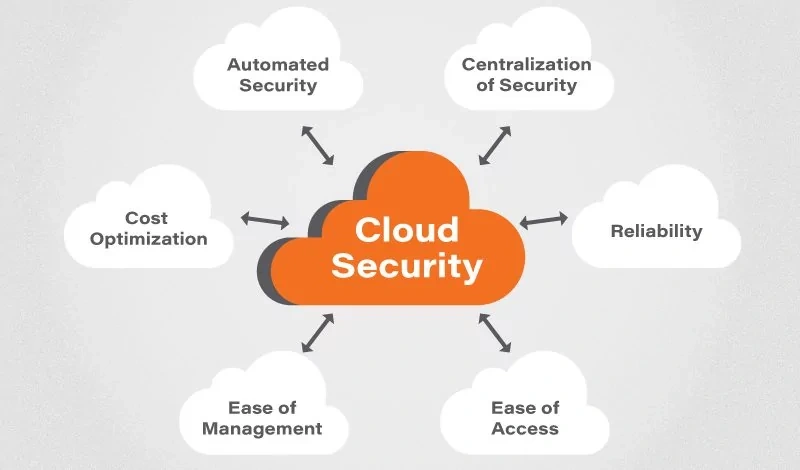
Security and reliability are other major concerns for organizations considering a full migration to cloud hosting. Fortunately, they are just some of the many benefits of cloud computing:
- Data security:Cloud hosting service providers strengthen data security with advanced features such as firewalls, automatic backups, malware scanning, encryption and multi-factor authentication. They utilize artificial intelligence and machine learning technologies to continuously monitor and regularly update security protocols to prevent vulnerabilities and data loss.
- Physical security:Cloud service providers implement industry-standard physical security measures such as surveillance cameras, access control systems, and backup systems to protect against unauthorized access, vandalism, or natural disasters. For example.Azure Data CenterAdopt predictive and reactive security strategies globally to mitigate cyber threats.
- Redundancy and High Availability:Data centers are designed with redundancy to prevent downtime and ensure continuous business operations. Data is mirrored across multiple centers to provide high availability and to withstand a single point of failure, such as a power outage or component failure.
- Disaster Recovery (DR):Cloud disaster recovery involves a strategy for backing up IT resources to ensure business continuity during a disaster. Cloud-based disaster recovery is cost-effective, scalable and reliable, and providers maintain data centers in multiple geopolitical regions to minimize the risk of failure.
- Regular backups: Regular cloud backups are critical to protect against cyber attacks or accidental deletions. Backups such asAli CloudCloud hosting services such as these offer automatic backup features to quickly restore data and allow businesses to access their files at any time.
- Compliance and Certification:Compliance with regulations such as HIPAA, FISMA, GDPR, PCI DSS and security standards such as ISO 27001 is critical for cloud web hosting providers. Before choosing a service provider, verify theirCompliance Certificationto ensure that they comply with high standards of safety and quality requirements.
What are the advantages of cloud hosting over traditional hosting?
We will now explore the unique advantages of cloud hosting over traditional hosting models such as shared hosting, VPS (Virtual Private Server) and dedicated servers.
Is cloud hosting better than shared hosting?
Shared hosting restrictions:Shared hosting means that resources are distributed among multiple users, which can lead to performance issues and limited scalability. For growing sites or sites with fluctuating traffic, this configuration may seem limiting.
Cloud Hosting Advantage:In contrast, cloud hosting offers scalable resources, enhanced security and greater reliability. Its ability to dynamically adjust resources makes it a stronger, more adaptable option for expanding organizations.
Is cloud hosting better than VPS hosting?
VPS hosting restrictions:In VPS hosting, users are limited to the capacity of the physical server even though they have a dedicated portion of the server resources. Expanding resources can be cumbersome and may require server relocation or cause service disruption.
Cloud Hosting Advantage:Cloud hosting breaks through these limitations by providing dynamic resource allocation. It supports instant scaling, which is ideal for dealing with sudden traffic surges or business growth. The flexibility and ease of scaling in cloud hosting makes it the preferred solution for organizations with variable demands or rapid growth.
insightCloud Hosting vs VPS
Is cloud hosting superior to dedicated servers?
Advantages of dedicated servers:Dedicated servers provide exclusive control over resources and bring high performance to resource-intensive websites. However, their high cost and limited scalability may pose a constraint to rapidly evolving business needs.
Cloud hosting flexibility:Cloud hosting bridges these gaps by providing a similar balance of dedicated resources, complemented by the advantage of enhanced scalability, often at a lower overall cost. Its flexibility in managing changing resource requirements makes it an attractive option for a wide range of business applications.
Popular Cloud Hosting Service Providers



Final Decision
Cloud computing has truly become a disruptive force in the hosting industry, revolutionizing the way businesses operate and meet market demands. Although I think there are more untapped benefits.
As technology advances, cloud hosting will play a vital role in helping organizations adapt to the evolving digital landscape, meet customer needs on demand, and, most critically, open up endless possibilities for success.
Next steps: what to do now?
- FromRecommended Cloud Server Activitieschoose from
- utilizationRecommended Cloud BuildersBuild your website
- comparisonsWeb Hosting vs. VPS Hosting vs. Cloud Hosting
Learn more about cloud hosting
- What is Cloud Hosting? An Overview of Cloud-Based Web Hosting
- VPS vs. Dedicated Server: Which Hosting Plan to Choose?
Frequently Asked Questions
How can cloud hosting save businesses money?
Cloud hosting eliminates the capital expenditure costs of buying and managing hardware. Since it operates on an infrastructure-as-a-service model, businesses only pay for the resources they use. This pay-as-you-go model is extremely cost-effective and ideal for small and medium-sized business owners looking to compete with larger organizations.
In addition, because cloud hosting has excellent elasticity and scalability, it ensures that resources are properly optimized and utilized. This means that your system only uses the resources it needs when it needs them, thus minimizing the costs associated with over-provisioning.
Can cloud hosting handle high traffic and sudden spikes in demand?
Yes! One of the most attractive features of cloud hosting is elasticity. Most cloud hosting providers offer elasticity features that allow the system to respond effectively to sudden surges in demand without crashing or slowing down.
Is cloud hosting secure?
Yes, cloud hosting is inherently secure. One of the major advantages over local hosting is that cloud computing systems have a strong security system that protects against all forms of data loss and tampering. In addition, cloud hosting data centers have a high degree of security and redundant backups. Even in the event of unfavorable circumstances beyond your control, you will still be able to access your data without worrying about it being corrupted.
They use encryption technology, firewalls, access control and other security mechanisms to guard against unauthorized access, data breaches and other security threats. However, it is recommended that you prepare and do your research to ensure that you are not caught off guard. Also, implement your own security measures to protect your valuable data from loss.
Can cloud hosting improve collaboration efficiency and accessibility?
Of course! Cloud collaboration boosts team productivity by allowing team members to communicate effectively in real time. It allows users to access data and applications from anywhere with an internet connection, which is especially beneficial for teams working remotely.
Many cloud hosting service providers offer a wide range of collaboration tools and integration options, including project management software, team communication tools, and productivity applications. These tools integrate seamlessly with cloud hosting environments, enabling teams to collaborate efficiently in a unified ecosystem.




 English