











In the huge system of the Internet, behind every website that can be easily accessed by us, there is a complex and subtle technical support. Among them, domain name, DNS (Domain Name System) and SSL (Secure Sockets Layer) are the three cornerstones of website operation, and they collaborate with each other to present us with a colorful, safe and reliable online world. In this article, we will explore the relationship and role of these three, to help you unravel the mystery behind the operation of the site.
Domain name: the “house number” of the website
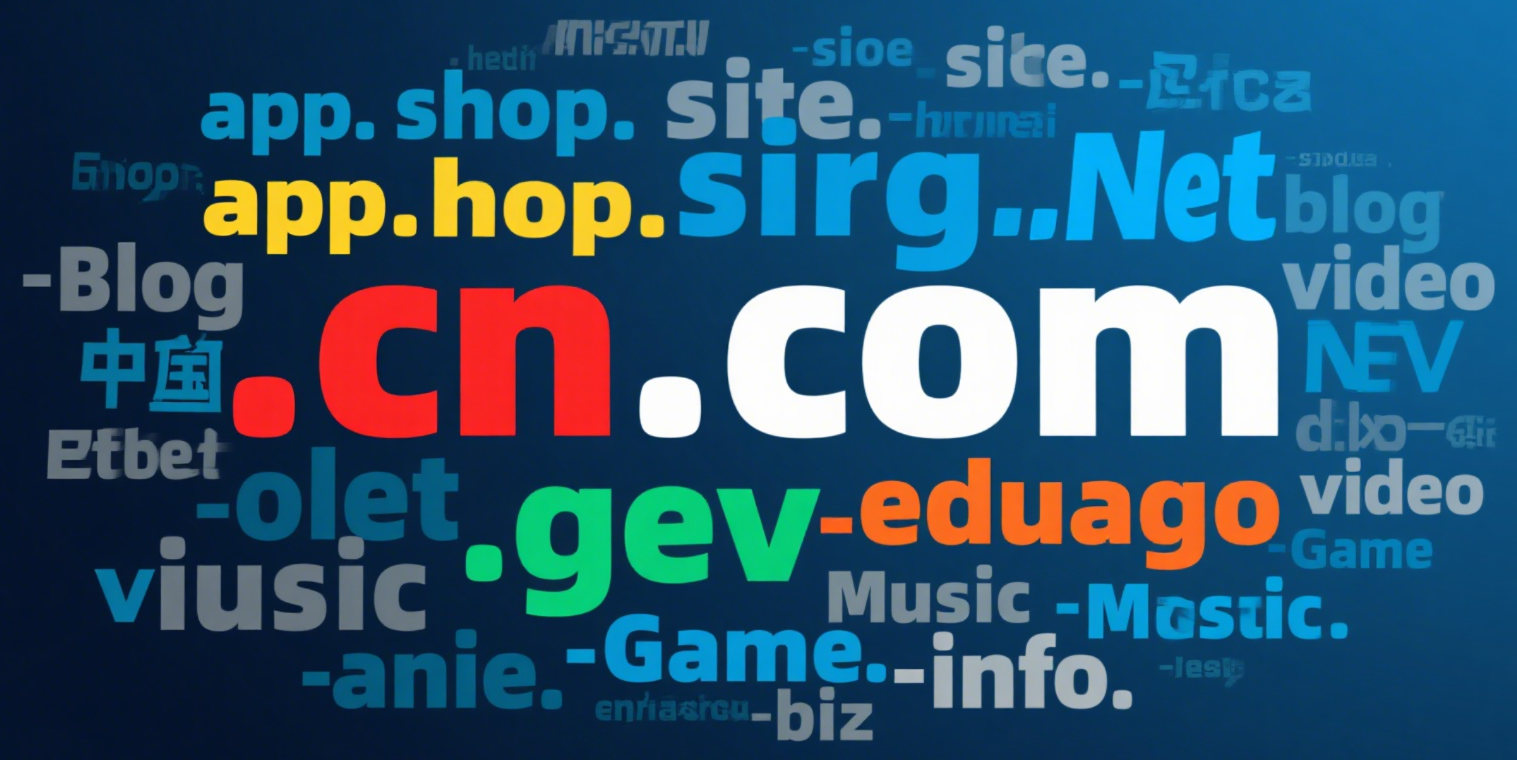
A domain name, in simple terms, is the web address we type into the address bar of our browser, for example “www.likacloud.com”. It is the identification of the website on the Internet, just like the door number of every household in the real world, which makes it easy for people to remember and access. A domain name is unique and there will not be two identical domain names globally. It consists of several parts to “www.likacloud.com”For example, “com” is the top-level domain name, and there are other common top-level domain names such as “.net” and “org”, which usually represent the nature or domain of the website. com“ is the top-level domain name and ”.net“, ”.org“ and so on, which usually represent the nature of the website or the domain it belongs to; ”example" is the second-level domain name, which can be registered and defined by the website owner, and is often related to the brand or business; "www" is the host name, which is used to identify a specific server or service, of course, there are many websites that omit the "www" part, such as LikaCloud. There are many websites that omit the "www" part, such as LikaCloud, which only useslikacloud.com
The existence of domain names greatly simplifies the process of accessing websites. Imagine that without domain names, every time we visit a website, we would have to type in a complex string of hard-to-remember IP addresses, such as “192.0.2.1”, an almost impossible task for the average user. Domain names make the Internet easier to use by transforming abstract IP addresses into strings that are easy to understand and remember.
DNS: The Internet's “Address Book”
Since the domain name is so important, how is it linked to the actual server IP address of the website? This is where DNS (Domain Name System) comes into play. DNS is like the “address book” of the Internet, responsible for resolving the domain name we enter into the corresponding IP address, thus directing our browser to the correct web server.
When we type a domain name into a browser and press enter, the DNS resolution process begins. First, the browser checks the local DNS cache to see if there is already a record of an IP address for the domain name. If it does, the browser uses that IP address to establish a connection with the server. If no record exists in the local cache, the browser sends a query request to a local DNS server (usually provided by our Internet Service Provider ISP). When the local DNS server receives the request, it also queries its own cache. If there is no result for the domain name in the cache, it will perform a recursive query. During the recursive query process, the local DNS server will initiate queries to the root DNS server, the top-level domain DNS server, and the authoritative DNS server in turn, until it obtains the IP address corresponding to the target domain name. Finally, the local DNS server returns the query result to the browser, and the browser uses this IP address to establish a connection with the web server to retrieve the content of the web page.
Through this mechanism of query layers, DNS ensures that no matter whether we visit domestic or foreign websites, we can quickly and accurately find the corresponding servers, which guarantees the smooth communication of the Internet.
SSL: “Security Guard” for Network Communications
During our smooth access to websites via domain names and DNS, data is transferred between the browser and the server. However, the Internet is not an absolutely secure environment, and data may be at risk of being stolen or tampered with during transmission. SSL (Secure Sockets Layer) technology was developed to secure the transmission of data, and today its successor, TLS (Transport Layer Security), is more commonly used, but it is still customary to refer to this class of security protocols collectively as SSL.
SSL serves three main purposes: encrypting data, authenticating the server, and ensuring data integrity. When we visit an SSL-enabled website, there is an SSL handshake between the browser and the server. During the handshake, the server sends the browser its own digital certificate, which contains the server's public key and information about the certificate authority (CA). The browser verifies the authenticity and validity of the certificate and confirms that the server's identity is trusted. The browser then generates a session key for encrypted communication and sends it to the server encrypted using the server's public key. The server decrypts the session key using its own private key, and thus a secure encrypted channel is established between the two parties. After that, all the data transmitted between the browser and the server will be encrypted by this session key, even if the data is intercepted by a third party, due to the lack of the correct key, can not be decrypted to view the content, thus ensuring the confidentiality of the data. At the same time, SSL also ensures that data is not tampered with during transmission through techniques such as Message Authentication Code (MAC), which maintains the integrity of the data.
The existence of an SSL certificate is the key to enabling SSL on a website. The website owner needs to apply for an SSL certificate from a trusted certificate authority (CA), which will strictly audit the website's domain name ownership, identity and other information, and will issue the certificate only after the audit is passed. When users visit the website, the browser will verify the legitimacy of the website according to the certificate information, and only websites with legitimate and valid certificates will the browser display the security lock logo, so that users can browse with peace of mind.
For free SSL, check out:
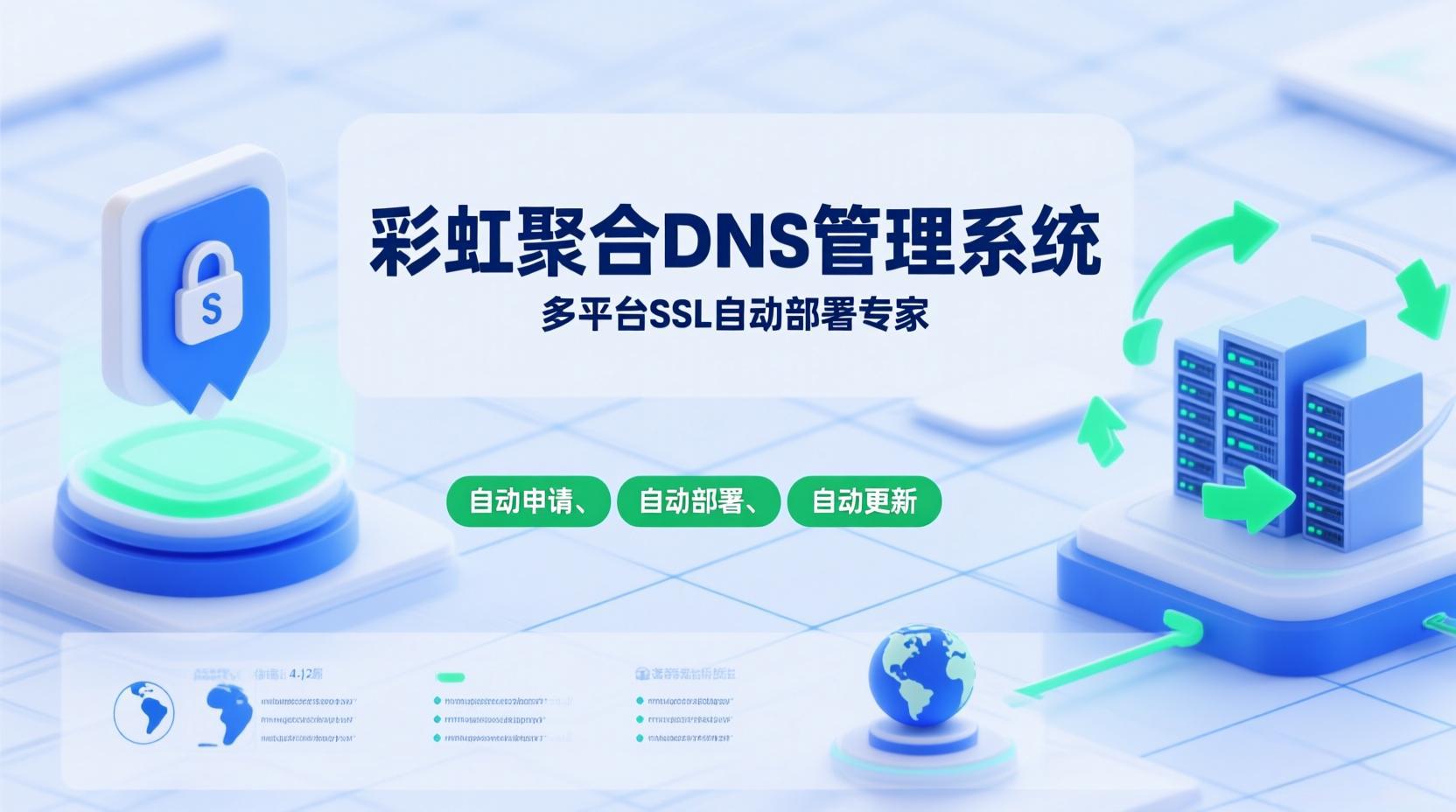
Of course, free SSL applications are usually provided by the server administration panel, for examplePagoda PanelJust offer Let's Encrypt free certificates.
Mainstream server providers also offer free SSL certificate applications, for example:


Relationship between the three: close collaboration to ensure the operation of the website
Domain names, DNS and SSL do not exist in isolation; they work together to ensure the normal operation of websites and secure access for users. The domain name serves as an identifier for the website, making it easy for users to remember and input; DNS resolves the domain name to an IP address, providing a path for the browser to find the web server; and SSL establishes a secure encrypted channel between the browser and the server to ensure secure data transmission.
For example, when we type in our browser “www.likacloud.com” and visit the site.
- The browser first passes through the DNS resolution process to “www.likacloud.com” domain name to the corresponding IP address, assuming “192.0.2.1”.
- The browser uses the resolved IP address “192.0.2.1” establishes a connection with the web server. During the connection process, the browser and the server perform SSL handshake, the server presents the SSL certificate, the browser verifies the authenticity and validity of the certificate and confirms that the server's identity is trustworthy, and then the two sides establish a secure encrypted channel.
- The browser sends a request to the server through a secure channel to obtain the web page content. The server returns the encrypted web page data to the browser, which decrypts the data and displays it to the user.
It can be said that the domain name is the “facade” of the website, DNS is the “navigation” that connects the “facade” with the actual “house” (server), and SSL is the “defender” that protects the entire communication process, all three are indispensable to build a stable and secure Internet environment for our daily use. ", and SSL is the "guard" for the entire communication process, all three are indispensable to build a stable and secure Internet environment for our daily use.
summarize
Domain names, DNS and SSL are the three cornerstones of a website's operation and each plays a unique and important role. Domain name makes a website easy to access and identify, DNS realizes the conversion of domain name to IP address and guarantees the addressing of network communication, and SSL provides security for data transmission and prevents information leakage and tampering. Understanding the working principles and interrelationships of these three cornerstones not only helps us better understand the operation mechanism of the Internet, but also enables us to pay more attention to network security and identify potential risks in our daily surfing process. In the future, with the continuous development of Internet technology, these three cornerstones will also continue to evolve, bringing us a more efficient and secure Internet experience.
View Recommended Domain Name Registrars and SSL Providers




 English